The First Run Is a Small Experiment, Not a Test
A first run can help you notice what feels comfortable, choose a manageable pace and plan a useful next outing without judging your ability or potential.

A first run works better as a small experiment than as a test of whether you are “a runner”. The useful question is not how fast or far you can go, but what you notice when you move at a pace that feels manageable.
A test asks for a verdict; an experiment gives you something to work with. You might discover that brisk walking feels comfortable, that jogging makes you tense, or that a familiar path helps you relax. Those are observations, not judgements about your future.
What should a first run tell you?
Keep the aim narrow. Notice whether you can speak in short phrases, whether slowing down helps your breathing settle, and whether the route and surface feel comfortable. You do not need a distance target or a record to make the outing useful.
Separate what happened from what you think it means. “I wanted to walk after a short jog” is an observation. “I am not built for running” is a much broader conclusion, and one outing cannot support it. A pleasant first run is not a promise that every outing will feel the same.
Choose a route that makes it easy to adjust: a nearby park path, a familiar pavement, or a short out-and-back where turning home is simple. Wear comfortable clothes and familiar trainers if you have them. For this first outing, leave out extra challenges such as an unfamiliar steep hill or a route that takes you far from home.
Should you jog continuously or alternate with walking?
Neither approach is more legitimate. Choose the one that lets you notice how you feel without rushing.
When might an easy continuous jog suit you?
A continuous jog may suit you if a gentle shuffle already feels relaxed and you can speak in short phrases without straining. Keep it brief enough that you can slow down or stop while you still feel in control; the aim is to notice the pace, not find your limit.
When is a jog-and-walk approach useful?
Alternating an easy jog with walking can suit you if running makes your breathing feel hurried, if you are returning after a long pause, or if you prefer regular chances to reset. Walking is part of the plan, not a retreat from it, and the contrast can help you judge how each pace feels.
What if walking feels like the right starting point?
A brisk walk can be a useful first outing if gentle jogging feels uncomfortable or distracting. You can get familiar with your shoes, route and pace before deciding whether to add a jog. There is no need to treat that choice as a test of commitment.
Say you start on a flat path expecting to jog all the way, but soon feel tense and begin watching every breath. You slow to a walk until your breathing feels more settled, then try another easy jog if you want. The observable result is a clearer sense of whether changing pace makes the outing feel more manageable.
How can you tell if your expectations are helping?
Expectations can come from a friend’s pace, a route you saw someone else run, or the idea that a “proper” run must involve continuous jogging. Ask whether an expectation helps you stay curious or pushes you to ignore what you notice. If it makes you hurry, set it aside for this outing.
Before you leave, choose one question to carry with you: “Does this pace feel easy enough to repeat?” or “Do I feel more settled after walking?” One question is usually enough. Trying to judge breathing, posture, speed, distance and fitness all at once can make a short outing feel like an examination.
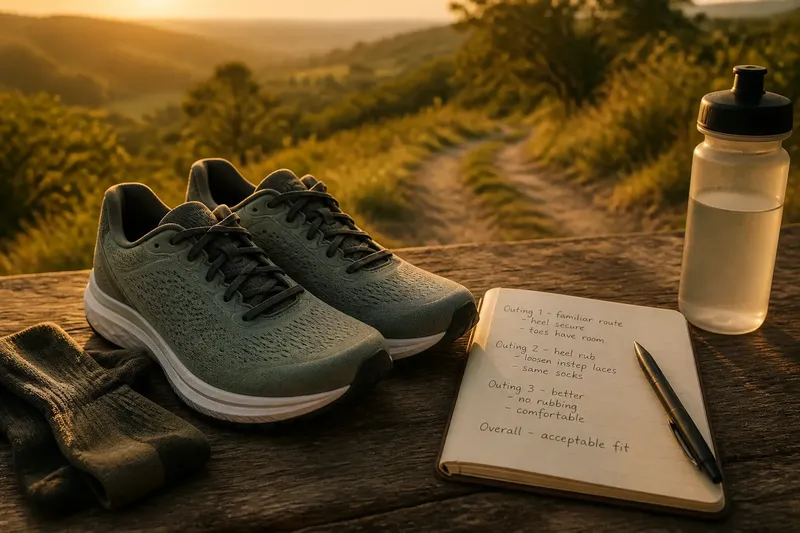
Afterwards, jot down plain observations in a notebook or notes app. Record the route, whether you jogged or walked, what felt comfortable, and what you might change next time. “The hill made me speed up” is more useful than “I was terrible on hills”. The note is for your future self, not a grade.
Which starting approach fits your situation?
Choose the option that seems safe, unhurried and interesting enough to repeat. Your choice can change from one day to another.
- Consider a continuous easy jog: If a very gentle jog already feels comfortable and you can resist turning it into a pace challenge, choose a simple route and give yourself permission to slow down. If it feels rushed or strained, switch to walking instead.
- Consider jog-and-walk intervals: If you want to run but would like regular chances to reset, use landmarks such as a bench or path junction to guide your changes of pace. If the pattern feels confusing or tiring, walk until you feel settled and keep the next outing simpler.
- Consider a brisk walk: If you are unsure how your body will respond, are returning after time away, or want to learn the route first, walk and notice how the pace feels. If the walk itself feels uncomfortable, slow down or head home rather than adding a jog.
- Check the route before setting out: If the path is familiar and conditions feel comfortable, use it; if it is slippery, exposed or difficult to leave, choose a simpler route or stay closer to home.
- Check your clothing and shoes: If your clothes feel comfortable and your familiar trainers do not distract you, keep them; if something rubs, pinches or feels unstable, adjust it before setting off or choose a walk instead.
- Check how you feel during the outing: If the effort remains manageable, continue at an easy pace; if you feel increasingly uncomfortable, slow down or stop, and seek qualified health advice if symptoms concern you or persist.
If you are unsure, choose the least demanding option that still interests you. You can change your mind during the outing. A useful first session leaves you with something clear to learn, not a decision you have to defend.
When should you slow down or stop?
Ordinary effort can include warmer breathing and active-feeling muscles. Discomfort is not something you have to defeat. Slow to a walk or stop if something feels wrong, sharply painful or increasingly uncomfortable. If symptoms concern you or persist, speak with a qualified health professional rather than trying to diagnose the cause yourself.
Include the route and conditions in your decision. If the path is slippery, the weather feels uncomfortable, or the light is fading, choose a safer, simpler outing or head home. A first run does not have to happen on a particular surface or follow a fixed plan.
What should you ask after your first run?
How fast should my first run feel?
Choose a pace that feels deliberately easy, not like a race or someone else’s training. If speaking becomes difficult or you feel hurried, slow down or walk and notice whether that helps.
Is it all right to walk during a first run?
Yes. Walking can be planned recovery during a jog-and-walk outing, or the whole outing if that feels more comfortable. It gives you information about effort without requiring you to push through unease.
What if I do not enjoy the first outing?
One outing can be affected by the route, weather, expectations or how you felt that day. Note what bothered you and consider changing one thing next time, such as choosing flatter ground or walking more; you do not need to make a lasting judgement immediately.
How do I decide what to change next time?
Start with the observation that mattered most. If the pace felt demanding, slow it down; if the route felt exposed, choose a more familiar one; if walking breaks helped, plan to keep them. Changing one element makes it easier to notice what feels different.
How should you plan the next outing?
Choose a repeatable outing rather than a demanding target. You might return to the same flat path, keep the same jog-and-walk pattern, or take a brisk walk and notice how it feels. Familiarity makes it easier to compare your own experience without turning that comparison into a judgement.
Keep your note modest and specific: what felt comfortable, what did not, and what you want to adjust. A first run is useful when it leaves you with a clearer next choice. Keep that choice small enough to adapt: familiar trainers, a route you can leave easily, and permission to walk whenever the pace stops feeling manageable.