The New-Shoes Shortcut That Skips the Real Question
New running shoes cannot settle every doubt. Learn how to judge fit and comfort, and decide what to adjust before treating a purchase as the answer.
New running shoes can change how a run feels, but they cannot answer every question about why a run feels uncertain. If you are wondering whether a shoe is right for you, start with fit and personal comfort rather than the promises on its box. A calm week of ordinary wear can tell you more than a confident description of cushioning or support.
What can a new pair actually change?
A shoe is the surface between your foot and the ground. Its shape, upper, sole and fastening all affect how it feels as you move. A different pair may feel more secure or less restrictive, and that can make getting out the door more comfortable.
But a purchase does not explain every sensation during a run. Pace, terrain, weather, socks and how your body feels that day can all contribute. Nor does a label promising extra cushioning or stability say whether that design suits your foot. Treat product language as a description of the shoe, not a prediction of your experience.
This distinction matters if you are new to running. It is tempting to interpret every awkward feeling as evidence that the shoe is wrong, or every comfortable first impression as proof that it is perfect. Neither conclusion follows from one outing. The useful question is narrower: does the shoe feel acceptably comfortable, secure and unforced in the situations you actually run?
How should you judge fit at home?
Try shoes when your feet feel like they do at your usual running time, wearing the socks you expect to run in. Stand, walk and bend your toes. Check that the heel feels held without rubbing, the upper does not press uncomfortably across the foot, and your toes can move rather than being squeezed together.
Fit is not just a question of shoe length. A shoe can have ample room at the front yet feel tight across the instep, or feel comfortable standing still but slip at the heel when you walk. Notice where the shoe touches and where it moves. Do not assume that changing the size is the only possible answer: another width or shape may suit you better.
Fasten the laces evenly, without pulling them so tight that they create pressure. If the shoe feels secure only when you cinch the laces hard, treat that as useful information. A different lacing arrangement may help with a minor fit preference, but it cannot make an unsuitable shape comfortable.
Product labels, manufacturer guidance, return conditions and local rules can differ, so check them before wearing shoes outdoors if you may need to return them.
What should a first week tell you?
Use a short, ordinary period to notice how the pair behaves, rather than setting out to prove anything. If you already run, wear the shoes on a familiar, manageable route and keep the rest of the outing ordinary. If you are not yet running, walk in them first and choose a gentle first run only if they feel comfortable. Avoid changing shoes, socks, route and effort all at once; too many changes make it harder to identify what you are responding to.
- Before wearing them: check for obvious pressure points while standing and walking indoors.
- On the first outing: notice whether your heel stays in place and your toes have room as you move.
- Afterwards: consider whether discomfort came from a specific contact point or from the general effort of running.
- On another ordinary outing: see whether the same shoe sensation returns in similar circumstances.
- At the end of the week: decide whether the fit remains acceptable, needs a small adjustment, or is a reason to try another pair.
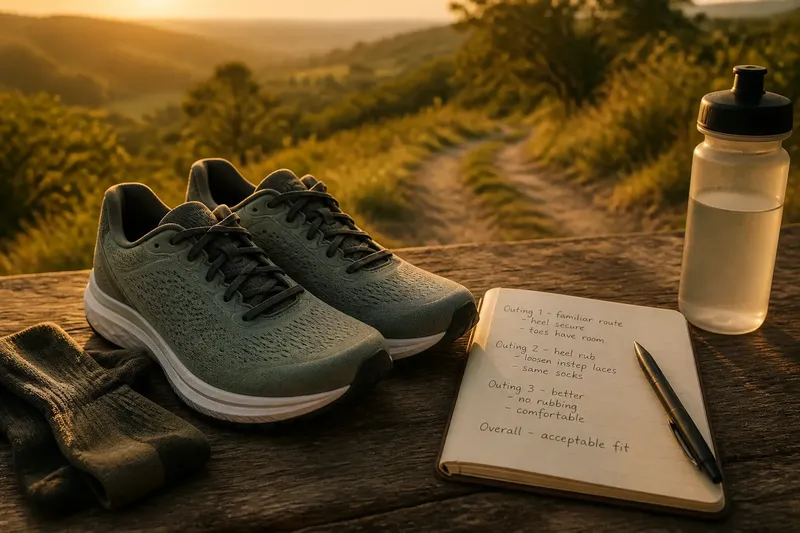
Say you buy a pair that feels comfortable indoors but rubs at the heel on a familiar path. On the next outing, you use your usual socks and loosen the laces slightly across the instep while keeping the heel secure. If the rubbing remains, the observable result is not a verdict on running; it is a clearer reason to reconsider the shoe’s shape or fit.
Keep the notes simple. A word such as “heel slip” or “pressure over toes” is more useful than a broad judgement like “bad shoe”. Record the route and socks only when they help explain a change. This is not a formal assessment; it is a way to avoid asking your memory to compare sensations that happened on different days.
What if the shoe feels wrong?
First separate a fit problem from general unfamiliarity. A new shoe may feel different from an old, familiar pair without being painful or restrictive. A particular pressure point, persistent rubbing, numbness or a feeling that your foot cannot move naturally deserves more attention than a vague sense of novelty.
Try a modest adjustment only if it addresses a clear cause. Loosening a lace over a pressure point may make sense; tightening every section to stop heel movement may create discomfort elsewhere. If the shoe still feels uncomfortable after a reasonable adjustment, stop treating it as the right pair simply because it is new or because its description sounded persuasive.
If discomfort continues, affects ordinary walking, or raises a health concern, pause running in that pair and speak with a qualified healthcare professional. Shoe advice can help with preferences and fit, but it is not a diagnosis of pain or injury.
Which questions help you choose?
Should beginners buy a specialist running shoe?
Choose footwear that feels comfortable and secure for the way you plan to use it. A specialist shop can offer fitting options, but a technical label alone cannot tell you what will suit your foot.
Do you need the same shoe as another runner?
No two people have to prefer the same feel. Another runner’s recommendation can suggest a pair to consider, but your own fit and comfort should decide whether it stays in contention.
Can cushioning promises settle the choice?
They describe a design feature, not a personal outcome. Consider whether the shoe feels comfortable during your usual movement rather than assuming a particular level of cushioning will resolve uncertainty.
When is it time to try another pair?
Consider another option when a clear discomfort remains despite a sensible fit adjustment, or when the shoe feels insecure in ordinary use. A different shape or width may be more relevant than a different marketing claim.
What is the real shortcut?
The useful shortcut is not buying first and expecting certainty to follow. It is asking a smaller question: can you move comfortably in this pair, with enough room and a secure feel, on the kind of outing you intend to do? That question keeps the decision grounded in what you can observe.
New running shoes may be the right purchase, but they are not a substitute for noticing how a shoe fits your own foot. Give fit and comfort a quiet week of attention, make one sensible adjustment when there is a clear reason, and let persistent discomfort count as information. The next useful decision may be to keep the pair, try another shape, or ask a qualified professional for help—not to buy more promises.